
Joulu sijoittuu ajankohtaan, jolloin pohjoisella pallonpuoliskolla päivä alkaa pidentyä. Ja päinvastoin. Se on ajankohta , jolloin vuosi vaihtuu meidän kalenterissamme ja jota on historian kirjojen mukaan on juhlittu ennen ajanlaskumme alkua. Sitten joulusta tuli kristillinen juhla noin 2000 vuotta sitten. Muut uskontokunnat ovat omaksuneet joulun osaksi arkeaan kun joulusta tuli yhteinen juhla elokuvien, laulujen ja leikkien myötä. Internetin kautta tieto levisi ja joulu arkipäiväistyi. Se on ollut myös perheen ja lasten juhla lahjoineen ja yhteisine aterioineen.
Mitä se on nyt? Se on sekoitus kaikkea historian havinaa ja kulttuurien sekamelskaa. Se on merkinnyt vapaata palkkatöistä, mutta se on merkinnyt kotitöiden lisääntymistä. Koti on tullut siivota. Suomessa ihmiset ovat saunoneet joulusaunassa. Se on tarkoittanut monia erilaisia ruokia, joita ei muutoin arjessa ole näkynyt. Ja sitten joulupukkia lahjoineen. Tapa, mikä on levinnyt yli maanosien. Tämä kaikki on liittynyt ihmisen kehityshistoriaan.
Luonto on samaan aikaan elänyt omaa jouluaan eli luonnossa on lepokausi, jotta uusi kasvu voi alkaa. Tuosta kiertokulusta olemme saaneet aina vähän lisää tietoa kun tutkimustoiminta on kehittynyt. Ilmaston muuttuessa eläin ja kasvilajitkin muuttavat asuinpaikkaansa, eikä sitä ihminen oikein vielä pysty estämään. Mutta miten tämä liittyy jouluun? No siten, että siitä juhlimisesta on tullut luonnon kuluttamisen juhlaa vaikka pitäisi olla päinvastoin.
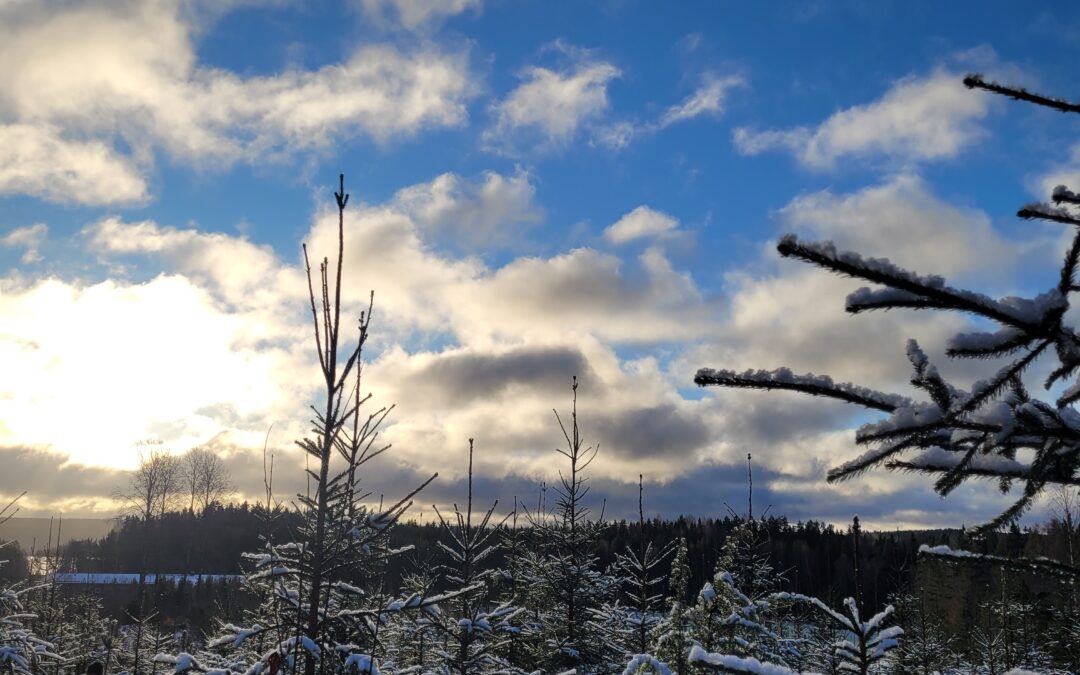
Luonto hiljenee lumen alle ja avaruus on täynnä tähtiä. Ihmisenkin on hyvä hiljentyä hetkeksi, katsella tähtitaivasta, antaa aivojen levätä ja vain olla. Annetaan kaikki itsellemme ja maailmalle aikaa tänä jouluna 2025/2026. Se on paras lahja.
Christmas falls at a time when, in the Northern Hemisphere, the days begin to get longer. And vice versa. It is the time when the year changes according to our calendar and, according to history books, it was celebrated even before the start of our era. Then Christmas became a Christian holiday about 2000 years ago. Other religions have adopted Christmas as part of their daily life when it became a shared celebration through movies, songs, and games. Through the internet, information spread, and Christmas became more commonplace. It has also been a holiday for families and children with gifts and shared meals.
What is it now? It is a mix of the echoes of history and a jumble of cultures. It has meant time off from paid work, but it has also meant an increase in household chores. Homes have to be cleaned. In Finland, people have used the sauna during the Christmas sauna tradition. It has meant many different kinds of foods that do not normally appear in everyday life. And then Santa Claus with his gifts. A tradition that has spread across continents. All of this is connected to the history of human development.
At the same time, nature, mother earth, has been celebrating its own Christmas, meaning there is a period of rest in nature so that new growth can begin. We have gradually learned more about this cycle as research has progressed. As the climate changes, animal and plant species also shift their habitats, and humans are not yet able to prevent it. But how does this relate to Christmas?
Well, in that celebrating it has become a festival of consuming nature, even though it should be the opposite. Nature quiets under the snow, and the sky is full of stars. It is good for humans to also pause for a moment, gaze at the starry sky, let the mind rest, and simply be. Let us give, ourselves and the world, time this Christmas of 2025/2026. That is the best gift and Christmas.